
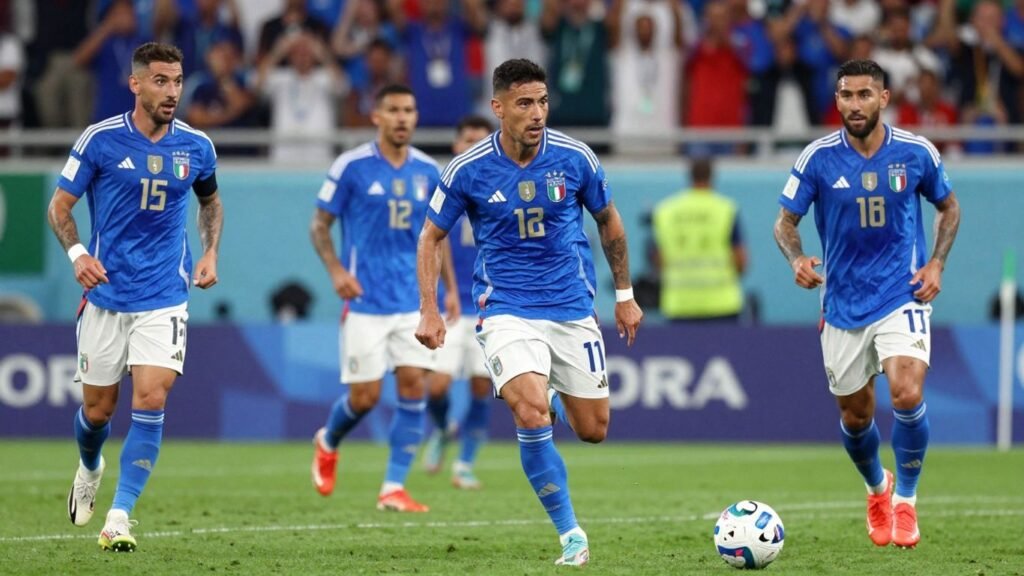
So, Italy’s path to the 2026 World Cup. It’s a big deal, right? We’re talking about the ‘girone Italia mondiali 2026’ draw, which basically means their qualifying group. It wasn’t exactly a walk in the park, and they ended up having to go through the playoffs. This article breaks down how they got there, what happened in their matches, and what it all means for their chances.
Key Takeaways
- Italy’s qualification for the 2026 World Cup wasn’t direct; they finished second in their group and will go through the play-offs.
- The ‘girone Italia mondiali 2026’ draw put Italy in Group I with Estonia, Israel, Moldova, and Norway.
- Norway topped Group I, qualifying directly for the World Cup, while Italy secured a spot in the play-offs.
- Key matches included tough away games and home fixtures that tested the team’s consistency throughout the qualifying campaign.
- Player availability due to suspensions and form played a role in Italy’s results during the qualifying matches.
Understanding the Girone Italia Mondiali 2026 Draw
So, Italy’s path to the 2026 World Cup started with the "Girone Italia Mondiali 2026" draw. This is basically the qualifying group stage where teams battle it out to earn a spot in the big tournament. For Italy, this meant being placed in Group I, a collection of five European nations tasked with the challenge of securing a World Cup berth.
The Road to Qualification: Group I Overview
Group I wasn’t exactly a walk in the park. It featured Estonia, Israel, Moldova, and Norway alongside Italy. The format was pretty standard: everyone plays everyone else twice, once at home and once away. The games kicked off in March 2025 and wrapped up in November 2025. The top team from each group automatically qualified for the World Cup finals. For Italy, this meant they had to finish first in Group I to guarantee their spot without needing any extra playoff matches.
Key Opponents and Their Strengths
Let’s break down who Italy was up against:
- Norway: They had some serious firepower, especially with players like Erling Haaland. They were definitely the team to beat in the group, and they proved it by topping the table.
- Israel: A tricky opponent, capable of putting up a fight. They had a decent goal-scoring record, showing they could trouble defenses.
- Estonia: While perhaps seen as the underdog, they could still cause upsets. They managed to score a decent number of goals but also conceded quite a few.
- Moldova: This team was generally outmatched in this group, struggling to score and conceding a lot of goals. They were the clear outsiders.
Italy’s Position in the Group Standings
Here’s how the group ended up:
| Pos | Team | Pld | W | D | L | GF | GA | GD | Pts | Qualification |
|---|---|---|---|---|---|---|---|---|---|---|
| 1 | Norway | 8 | 8 | 0 | 0 | 37 | 5 | +32 | 24 | Qualified |
| 2 | Italy | 8 | 6 | 0 | 2 | 21 | 12 | +9 | 18 | Advance to play-offs |
| 3 | Israel | 8 | 4 | 0 | 4 | 19 | 20 | -1 | 12 | |
| 4 | Estonia | 8 | 1 | 1 | 6 | 8 | 21 | -13 | 4 | |
| 5 | Moldova | 8 | 0 | 1 | 7 | 5 | 32 | -27 | 1 |
As you can see, Italy didn’t quite manage to finish top. They secured second place, which meant they didn’t get an automatic ticket to the World Cup. Instead, they had to go through the playoff route, which is always a bit more nerve-wracking.
The qualifying campaign is a marathon, not a sprint. Every match counts, and consistency is key. Even a few dropped points can change the entire trajectory of a team’s World Cup dream, forcing them down a more difficult path.
This setup meant Italy had to be sharp from the get-go. While they performed well enough to secure a playoff spot, the fact that Norway dominated the group highlights the challenge Italy faced and the level they needed to reach to compete on the world stage.
Italy’s Performance in the Qualifying Campaign
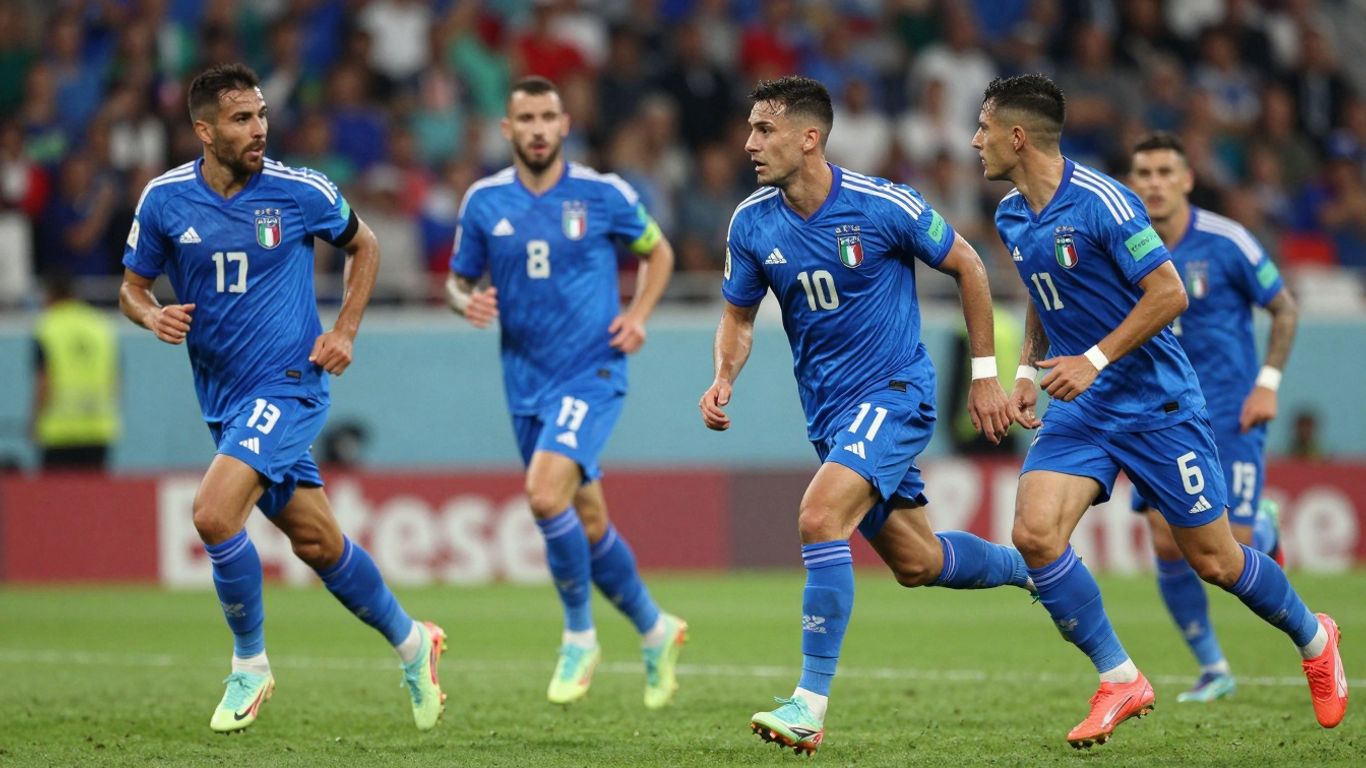
The road to the 2026 World Cup for Italy wasn’t exactly a smooth ride, but they managed to secure their spot in the playoffs. It was a campaign marked by some solid wins, a few surprising stumbles, and the usual drama of player availability. Let’s break down how the Azzurri actually performed.
Match Analysis: Key Victories and Setbacks
Italy’s qualifying journey had its ups and downs. They kicked off their campaign with a tough 1-4 loss against Norway, which was a bit of a shocker and definitely put the team under early pressure. This early defeat, featuring Manchester City’s player, set a concerning tone. However, the team showed resilience, bouncing back with crucial wins against teams like Estonia and Moldova. The home-and-away series against Israel proved to be a significant hurdle, with mixed results that kept the group standings tight. The 5-0 victory over Moldova was a standout performance, showcasing the team’s attacking potential.
Here’s a look at some key results:
- Norway 4-1 Italy: A tough opening match that highlighted areas needing improvement.
- Italy 3-0 Estonia: A solid response, demonstrating the team’s ability to secure points.
- Italy 5-0 Moldova: A dominant display of offensive power.
- Israel 4-1 Italy: A surprising setback that showed the competitive nature of the group.
Top Scorers and Defensive Pillars
While Italy boasts a talented squad, the goal-scoring load was shared. Moise Kean was a consistent threat, chipping in with important goals throughout the campaign. However, the team didn’t have a single runaway top scorer, which suggests a more collective effort in finding the back of the net. Defensively, the partnership at the back was generally solid, though there were moments of vulnerability, particularly in the matches against Norway and Israel. Keeping clean sheets was a priority, and for the most part, the defense held firm when it mattered most.
Impact of Player Suspensions and Form
Like any long qualifying campaign, Italy had to deal with players being unavailable due to suspensions. Key midfielders Nicolò Barella and defenders like Alessandro Bastoni missed crucial matches due to accumulated yellow cards. These absences forced the coaching staff to adapt tactics and rely on the depth of the squad. Player form also played a significant role; players coming off strong club performances often brought that momentum to the national team, while others struggled to find their rhythm. Managing these factors was key to maintaining consistency throughout the qualifying matches.
The ebb and flow of player availability and form is a constant challenge in international football. Teams that can adapt best to these disruptions often find themselves in a better position when the critical matches arrive. Italy’s ability to manage these situations, even with a few bumps along the way, ultimately helped them secure a playoff spot.
Navigating the European Qualifiers Schedule
Alright, let’s talk about how Italy actually got through the qualifying matches for the 2026 World Cup. It wasn’t just a straight shot; there was a whole schedule to follow, and timing really mattered. The whole process for the European Qualifiers kicked off in March 2025 and wrapped up in November of the same year. It’s a pretty packed schedule, with teams playing each other twice, home and away.
Understanding the Fixture List
The actual list of games, the fixture list, was set in stone by UEFA back in December 2024. It’s not just a random set of dates; it’s carefully planned out. For Italy, things got a little interesting because they were busy with the Nations League A quarter-finals in March 2025. This meant their World Cup qualifying campaign didn’t really get going until June 2025. So, while some teams were already a few games in, Italy had to hit the ground running later in the year.
Here’s a look at how the matches were spread out:
- March 2025: Initial matches for most teams, setting the early pace.
- June 2025: Italy’s campaign begins, alongside other mid-year fixtures.
- September 2025: A key period with multiple matchdays.
- October 2025: The penultimate set of games, where standings often start to solidify.
- November 2025: The final push, deciding who goes through directly and who heads to the play-offs.
Impact of International Breaks and Player Availability
These qualification windows are always a bit of a juggling act. You’ve got club football demanding a lot from players, and then suddenly, they’re off representing their country. The international breaks are built into the schedule, but they can disrupt a player’s rhythm. For managers like Italy’s, it’s about managing player fatigue and making sure key guys are fit and available for these crucial matches. Sometimes, a player might be carrying a knock from their club, or they might be suspended due to yellow cards picked up earlier. It’s a constant puzzle.
The schedule is designed to be challenging, testing a team’s depth and resilience over several months. It’s not just about the starting eleven; it’s about the entire squad and how well they can adapt to the demands of international competition.
Strategic Importance of Home and Away Matches
Every game counts, but playing at home versus away definitely has its own feel. Home advantage is a real thing, with the crowd behind you and familiar surroundings. Italy, like any team, would have looked at their home fixtures as opportunities to secure maximum points. Conversely, away games, especially in tough environments, are often about grinding out a result. The ability to perform well on the road is often what separates the teams that qualify directly from those that have to fight through the play-offs. Looking at the European Qualifiers schedule, you can see how the sequence of home and away games can influence momentum throughout the campaign.
The Significance of the Girone Italia Mondiali 2026
So, what does this whole "Girone Italia Mondiali 2026" thing really mean for the Azzurri? It’s not just about playing a few games; it’s about the path we take to get to the big dance. This qualification process is where the real drama unfolds, and for Italy, it’s a mix of tradition and the ever-present pressure to perform.
Direct Qualification vs. Play-off Path
There are generally two ways to make it to the World Cup from Europe: win your qualifying group and go straight there, or finish second (or sometimes third, depending on the format) and get a second chance through the play-offs. For Italy, finishing top of Group I would have meant direct qualification, a smoother ride. But as we saw, that didn’t happen. Norway clinched the top spot, leaving Italy to face the uncertainty of the play-offs.
- Direct Qualification: The dream scenario. Finish first, book your flights.
- Play-off Path: The nail-biter. A second chance, but against tougher opponents.
- Nations League: Sometimes, performance in the Nations League can also offer a route, though it’s usually a fallback for those who didn’t qualify directly or via play-offs.
The qualification draw, often referred to as the ‘Girone’, sets the stage. It dictates who you play, when you play them, and ultimately, the route you must take. For a nation like Italy, with a rich World Cup history, every match in this phase carries immense weight.
Historical Context of Italian World Cup Qualification
Italy has a long and storied history with the World Cup, winning it four times. However, qualification hasn’t always been a walk in the park. There have been times when the Azzurri have had to fight tooth and nail, even facing play-off matches. Remember the shock of missing out on the 2018 World Cup after losing to Sweden in the play-offs? That’s a scar that still stings and highlights why every single game in the qualifying campaign matters. It shows that no opponent can be taken lightly, and that past glories don’t guarantee future success. The 2026 World Cup draw mechanism itself is designed to create competitive groups, meaning even traditionally strong teams need to be on their game from the start.
Fan Expectations and National Support
When you wear the blue shirt, the expectations are sky-high. Italian fans are passionate, knowledgeable, and demanding. They expect the team to not only qualify but to do so playing attractive, winning football. The pressure from the tifosi is immense, and it can be a double-edged sword. It can spur the players on to greater heights, but it can also add to the burden. The journey through qualification is a shared experience for the nation, a period where everyone rallies behind the team, hoping to see them lift the trophy again. The results of the qualifying matches directly impact the mood across the country, and the hope is always for a triumphant return to the World Cup stage.
Looking Ahead: The Play-off Scenario
So, Italy didn’t quite clinch the top spot in Group I, ending up in second place behind Norway. That means, instead of a direct ticket to the 2026 World Cup, the Azzurri are heading into the play-offs. It’s not the ideal situation, but it’s a path they’ve walked before, and it’s definitely not a guaranteed loss.
Understanding the Play-off Structure
UEFA’s play-off system for the World Cup can be a bit of a maze, but here’s the gist for 2026. It’s designed to give a few more European teams a shot at qualification, even if they didn’t win their main qualifying groups. Typically, these play-offs involve teams that have performed reasonably well in their groups but missed out on direct qualification, often looking at Nations League performance as well.
- Pathways: There are usually a few different play-off paths, often determined by a team’s overall performance in the qualifying rounds or their standing in the Nations League.
- Format: These are usually knockout matches, meaning it’s win or go home. Teams will likely face off in semi-final and final ties.
- Participants: The exact number of teams and how they are seeded can change, but it’s generally a mix of group runners-up and potentially the best-performing group winners who didn’t qualify directly.
The exact format and the teams involved will be confirmed by UEFA closer to the time, but Italy’s second-place finish puts them firmly in contention for a spot.
Potential Opponents and Challenges
Who could Italy face? That’s the million-dollar question. The play-offs often throw up some interesting matchups. We could see them pitted against other strong European nations who also fell short of direct qualification. Think teams that might have had a tough group or a slight dip in form at the wrong moment.
Some teams that might be in the play-off mix, depending on their own qualifying results, could include:
- Teams that finished second in other UEFA groups.
- Potentially some of the higher-ranked teams from the Nations League who didn’t qualify directly.
The challenge is that these are often one-off games. Form on the day, a bit of luck, and handling pressure become massive factors. Italy will need to be sharp, clinical, and defensively solid, just like in any knockout competition.
Lessons Learned from Previous Qualification Campaigns
Italy has a history of navigating tricky qualification paths. Remember the 2018 World Cup? They famously missed out after losing a play-off to Sweden. That was a harsh lesson, and you can bet the current squad and coaching staff remember it well. It highlights that no opponent can be underestimated, and every single moment in these high-stakes games counts.
The play-off route demands a specific kind of focus. It’s less about the long grind of a group stage and more about delivering peak performances in short bursts. Mental fortitude is just as important as tactical execution when the stakes are this high.
On the flip side, they’ve also had success. The path to Euro 2020, while not a World Cup play-off, showed their ability to bounce back and perform when needed. The key will be to approach these play-off games with the right mindset: respect for the opponent, belief in their own abilities, and a relentless drive to secure that World Cup spot.
Looking Ahead: The Road to 2026 Continues
So, that’s the rundown on how Italy landed in their World Cup qualifying group for 2026. It wasn’t exactly a walk in the park, with Norway proving to be a tough opponent and securing the top spot. But hey, Italy managed to grab that second-place finish, which means they get another shot through the playoffs. It’s not the direct ticket they probably wanted, but it’s a chance, and that’s what matters. Now, the real work begins as they prepare for those crucial playoff matches. We’ll be watching to see if they can make it all the way to the finals in North America. Fingers crossed!
Frequently Asked Questions
What is the ‘Girone Italia Mondiali 2026’?
The ‘Girone Italia Mondiali 2026’ refers to Italy’s qualifying group for the 2026 FIFA World Cup. Think of it as a mini-tournament where Italy plays against other countries to earn a spot in the main World Cup event. This specific group was known as Group I in the European qualifiers.
Who were Italy’s opponents in their qualifying group?
Italy was in Group I with Estonia, Israel, Moldova, and Norway. They had to play each of these teams twice, once at home and once away, to try and get enough points to qualify for the World Cup.
How did Italy do in their qualifying matches?
Italy finished second in their group, which was a pretty good performance. They won most of their games, showing they have a strong team. However, they didn’t win the group outright, which meant they had to go through an extra stage called the play-offs to try and secure their World Cup spot.
What does it mean that Italy advanced to the play-offs?
Advancing to the play-offs means that even though Italy didn’t automatically qualify by winning their group, they still have another chance. The play-offs are like a second-chance tournament where teams that didn’t finish first in their groups compete for the remaining World Cup spots.
Why is qualifying for the World Cup important for Italy?
The FIFA World Cup is the biggest soccer tournament in the world! For a country like Italy, with a rich soccer history, qualifying is a huge deal. It’s a chance to compete against the best teams globally, make their fans proud, and potentially win the trophy. Not qualifying would be a major disappointment.
What happened in the play-offs for Italy?
The information provided doesn’t detail the outcome of the play-offs for Italy. It focuses on the group stage results where they finished second. The play-offs are a separate, often tense, competition that happens after the main group matches to decide the final qualifiers.