
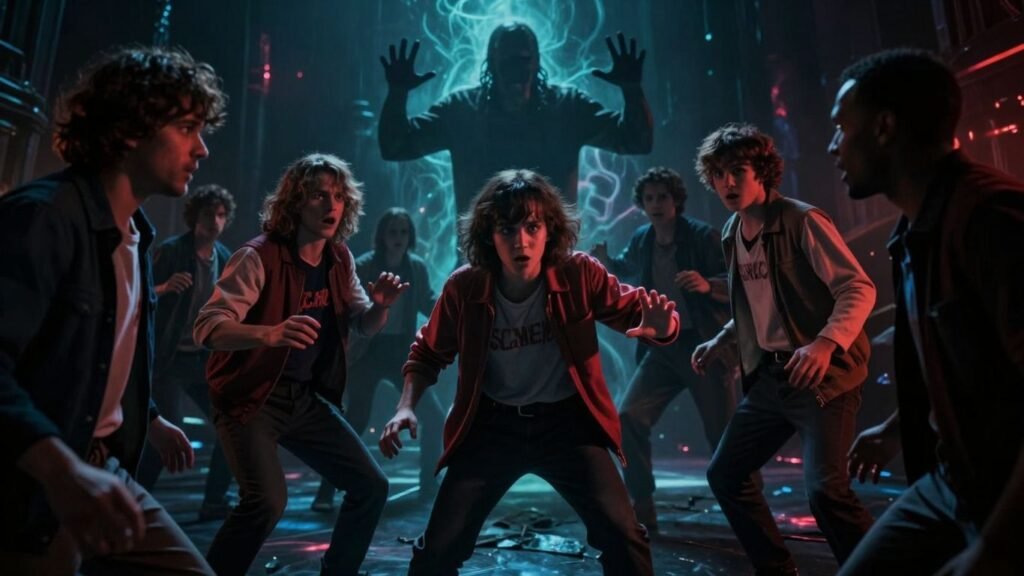
So, the final season of Stranger Things is finally here, and wow, it’s a lot to take in. It wraps up years of monster fights, portal hopping, and those iconic bike rides. The last episode, ‘The Rightside Up,’ throws everyone into the biggest battle yet, but then it pulls back to ask a really big question: what happens after the world is saved and you still have to grow up? It’s not just about beating the bad guys; it’s about dealing with everything that happened and the choices you make. This is the Stranger Things Ending Explained: Everything you need to know about the series finale.
Key Takeaways
- The series finale brings all the characters together for a massive confrontation with Vecna and the Upside Down, requiring a coordinated effort from everyone to succeed.
- Vecna’s origins are further explored, revealing his deep connection and manipulation by the ancient, sentient entity known as the Mind Flayer.
- Eleven faces a difficult choice, seemingly sacrificing herself to close the gate, leaving her fate ambiguous and open to interpretation.
- The epilogue jumps forward eighteen months, showing the characters attempting to rebuild their lives in Hawkins, with the older teens pursuing different paths and a new generation ready to continue the stories.
- Ultimately, the ending emphasizes that victory comes with lasting trauma, the importance of personal choice, and the enduring power of belief and connection, even after the monsters are gone.
The Final Battle: Facing Vecna and the Upside Down
Everyone Rolls Initiative: A Coordinated Assault
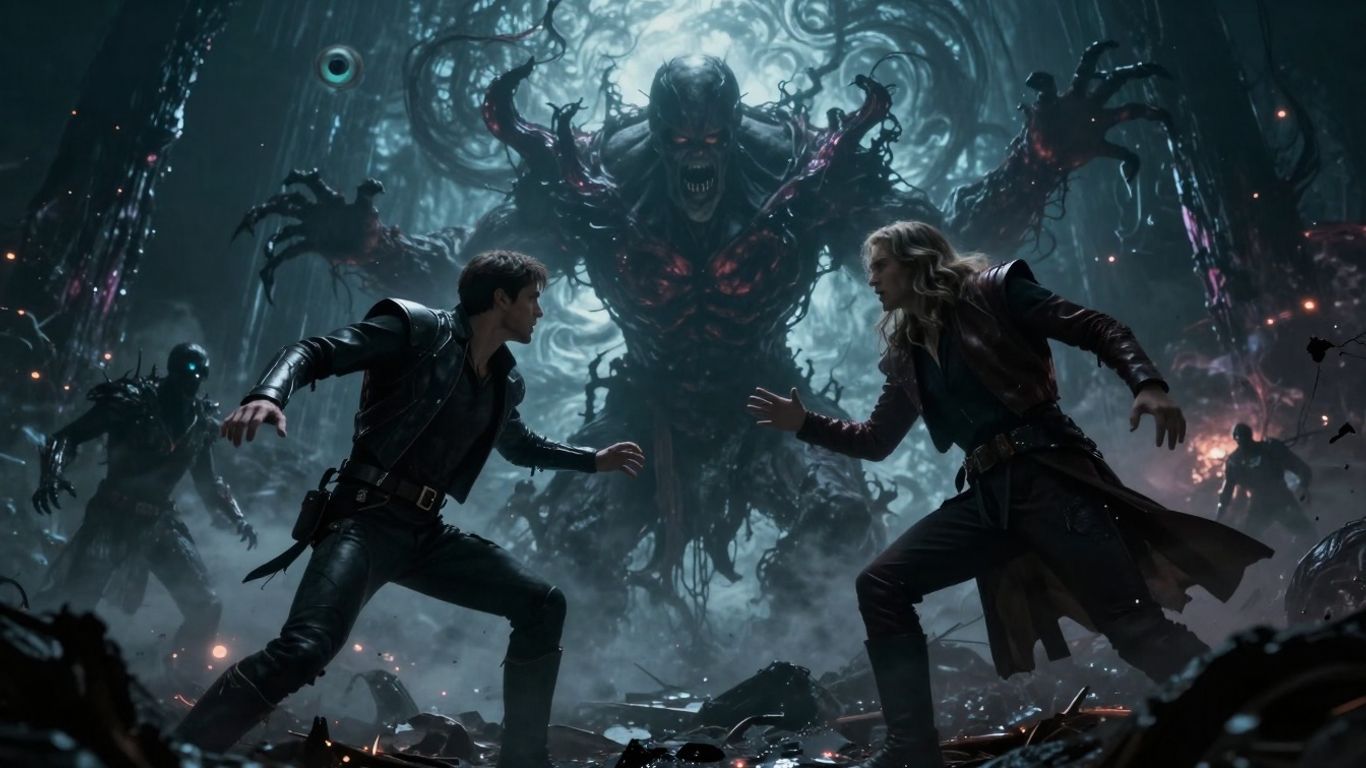
The final showdown wasn’t just a brawl; it was a meticulously planned operation, like a massive game of Dungeons & Dragons where everyone had a role. The gang split up, each team tackling a different piece of the impossible puzzle. Eleven, along with Kali and Max, went straight for Vecna’s mind, the psychic battlefield where the real fight was happening. Meanwhile, Hopper and Murray were tasked with hitting the Upside Down at its source, aiming to shut it down for good. The rest of the Hawkins crew had the grim job of pushing into the Abyss itself, trying to save the kidnapped kids and face whatever horror lurked at the heart of it all. It was chaos, sure, but it was organized chaos. The show didn’t waste time explaining things; these characters knew the drill by now, and so did we.
The Abyss Awakens: The Mind Flayer’s True Form
When the team finally reached the so-called Pain Tree, it became terrifyingly clear that the battlefield was more than just a location – it was alive. This massive structure unfolded, revealing itself as the Mind Flayer’s actual body, a monstrous, spider-like entity. Vecna had been hiding inside this dormant giant all along. What followed was the biggest fight the series had ever put on screen: a chaotic mix of fire, bullets, makeshift weapons, and a desperate struggle across the creature’s immense form. Every hit against Vecna also weakened the monster, showing how intertwined they truly were. Will, still psychically linked to Vecna, played a key role, proving that connection doesn’t always mean being controlled. The Mind Flayer’s hive mind shattered, and for the first time in ages, the silence felt earned.
Who Delivers The Final Blow?
While Eleven landed some massive hits and Will helped weaken him, the final act of defeating Vecna fell to Joyce. It was a poetic end. She was the first one to sense something was wrong, the first to fight when no one else believed her. Her action wasn’t just about killing a villain; it was about taking back control after years of fear. Vecna hadn’t just threatened the world; he had directly terrorized her family. Joyce ended him not as a superhero, but as a mother who had finally had enough. With that one decisive strike, the long war against the Upside Down finally reached its conclusion.
The battle was a desperate, multi-pronged assault, a testament to the characters’ growth and their willingness to face their deepest fears head-on. It wasn’t just about defeating a monster; it was about reclaiming their lives and their town from the encroaching darkness.
Unraveling the Mysteries of the Upside Down
Vecna’s Origins and the Mind Flayer’s Influence
So, how did Henry Creel, the kid from the 1950s, turn into Vecna, the big bad of the Upside Down? It turns out a weird, alien-looking object bonded with him when he was younger, basically opening a psychic door that never really closed. The Mind Flayer didn’t just take over; it kind of offered him a purpose, a twisted sense of belonging. Henry insists the destruction he caused was his own choice, but it’s hard to ignore the manipulation involved. He was groomed, in a way, into becoming a weapon. The truth is probably somewhere in the middle, and that messy, unresolved aspect is what makes the final fight so intense.
The Nature of the Upside Down Revealed
When the gang finally reaches the Upside Down’s version of the ‘Pain Tree,’ it’s a horrifying realization: the whole place is alive. This massive, spider-like structure unfurls, revealing the Mind Flayer’s true, dormant form, with Vecna hiding inside all along. The battle that follows is wild – fire, guns, makeshift weapons, and total chaos. Every hit against the creature also weakens Vecna. Will, still psychically linked to him, acts as a sort of anchor, proving that connection doesn’t always mean being controlled. The Mind Flayer’s hive mind collapses, and for the first time, the silence feels real.
The Destruction of the Interdimensional Bridge
With the immediate threats dealt with, Hopper and Murray set off the bomb to destroy the interdimensional bridge. The music swells, the wormhole collapses, and the Upside Down implodes. It seems like the gateway that’s plagued Hawkins is finally gone, sealing everything back into one reality. But as we know with this show, things are rarely that simple.
The victory feels earned, but the cost is always high. The lingering questions about the Upside Down’s true nature and its connection to our world remain, hinting that some doors, once opened, might never fully close.
Here’s a quick look at the key players and their roles in the final confrontation:
- Eleven: Delivers powerful psychic blows, weakening Vecna significantly.
- Will: His psychic link to Vecna is used to counter the villain’s influence.
- Joyce: Delivers the final, decisive blow, ending Vecna’s reign.
- Hopper & Murray: Responsible for detonating the bomb that destroys the interdimensional bridge.
Eleven’s Fate and the Lingering Questions
Eleven’s Choice: Sacrifice or Escape?
After the dust settles and the immediate threat of Vecna and the Mind Flayer is neutralized, Eleven faces a choice that hangs heavy in the air. As the interdimensional bridge begins to collapse, she makes a decision that shocks everyone. Instead of returning to Hawkins with her friends, Eleven chooses to stay behind in the rapidly disintegrating Upside Down. It’s not a move born out of a desire for martyrdom, but rather a calculated decision to prevent future threats. She realizes that as long as she exists, her power will always be a target, a potential weapon for those who would exploit it. By remaining, she hopes to ensure that no more children like her are created and that no more gates to the Upside Down are ever opened.
Her final moments with Mike are brief, a psychic goodbye filled with unspoken words and a profound sense of loss. Then, the Upside Down implodes, and Eleven seemingly vanishes with it. The show deliberately leaves this moment ambiguous, never explicitly confirming her fate.
Is Eleven Dead or Alive?
The finale plays coy with certainty, opting instead for a hopeful narrative presented during a final Dungeons & Dragons session. Mike, ever the storyteller, proposes a scenario where Eleven survived. He suggests she used Kali’s illusion powers to hide and escaped through underground tunnels just before the final collapse. His reasoning is detailed and optimistic, but ultimately unprovable. The others choose to believe him, not because they have concrete evidence, but because their shared belief has always been their greatest strength against the darkness they’ve faced.
Adding to the mystery, the very last shot of the series shows Eleven walking alone towards a serene village nestled beside waterfalls. It’s a peaceful image, far removed from the chaos of Hawkins and the dangers of the Upside Down. However, the show never clarifies if this is a real place she’s found or simply a figment of her imagination, a mental sanctuary. This deliberate ambiguity is a hallmark of the series, leaving the audience to ponder the possibilities long after the credits roll.
The Ambiguity of the Final Moments
Ultimately, the ending of Stranger Things doesn’t offer neat answers, especially concerning Eleven. It’s a deliberate choice by the creators to maintain a sense of mystery, much like the nature of the Upside Down itself. The series has always thrived on the unknown, and leaving Eleven’s ultimate fate open-ended fits perfectly with that ethos. It allows the audience to project their own hopes and fears onto the final moments, making the ending feel more personal and thought-provoking. The lingering questions about Eleven are not a flaw, but a feature, designed to keep the story alive in our minds. Whether she found peace, continued to fight, or became something else entirely, her journey’s conclusion is left for us to imagine, a testament to the enduring power of the stories we tell ourselves and each other.
The Epilogue: Growing Up After the End
Eighteen months have passed since the dust settled, and life in Hawkins, while not exactly back to normal, has found a new rhythm. It’s a bit messy, a bit awkward, but undeniably real. Hopper and Joyce, after all the near misses and heartbreaks, are finally building that quiet life together they always deserved. No more running, just… living. It’s a well-earned peace after years of fighting monsters.
Life Resumes in Hawkins
The younger crew, the ones who started it all, are graduating. They’ve seen things no kid should ever have to see, but they made it through. Dustin, ever the showman, even managed to deliver a pretty memorable, if slightly chaotic, valedictorian speech. Will’s finding his footing, stepping into who he is with a quiet strength that’s really something to see. Mike’s channeling his experiences into stories, trying to make sense of it all through words. And Lucas and Max? They’re just trying to find some peace after everything they’ve been through.
The Older Teens Chase New Futures
Meanwhile, the older teens are looking beyond Hawkins. Nancy’s traded the comfort of home for ambition, joining the Herald as a trainee reporter. Jonathan’s heading to NYU, ready to find his voice behind a camera. Robin’s carving out a path that feels completely her own, and Steve… well, Steve’s sticking around. Turns out, teaching and looking out for the next generation suits him just fine. They’ve all promised to keep in touch, meeting up once a month. Whether that actually happens, well, that’s another story.
A New Generation Begins
The very last scene brings us full circle, back to a Dungeons & Dragons table in the Wheeler’s basement. A dice rolls, a story ends. Childhood, officially, is over. But then, the camera pans, and we see Holly and her friends, bursting with excitement, ready to start their own adventure. It’s a clear message: stories don’t end, they just get passed on.
The world might have been saved, but the scars remain. This isn’t about forgetting what happened, but about learning to live with it, about choosing who you want to be when the monsters are gone but the memories linger. Hawkins is still standing, but it’s forever changed, and so are the people who call it home.
Here’s a look at where some of the older teens ended up:
- Nancy Wheeler: Joined the Herald as a trainee journalist.
- Jonathan Byers: Pursuing filmmaking at NYU.
- Robin Buckley: Building a career path that feels authentic to her.
- Steve Harrington: Staying in Hawkins, finding fulfillment in teaching and mentorship.
And the cycle continues, with a new group of kids ready to roll the dice.
What the Ending Truly Means
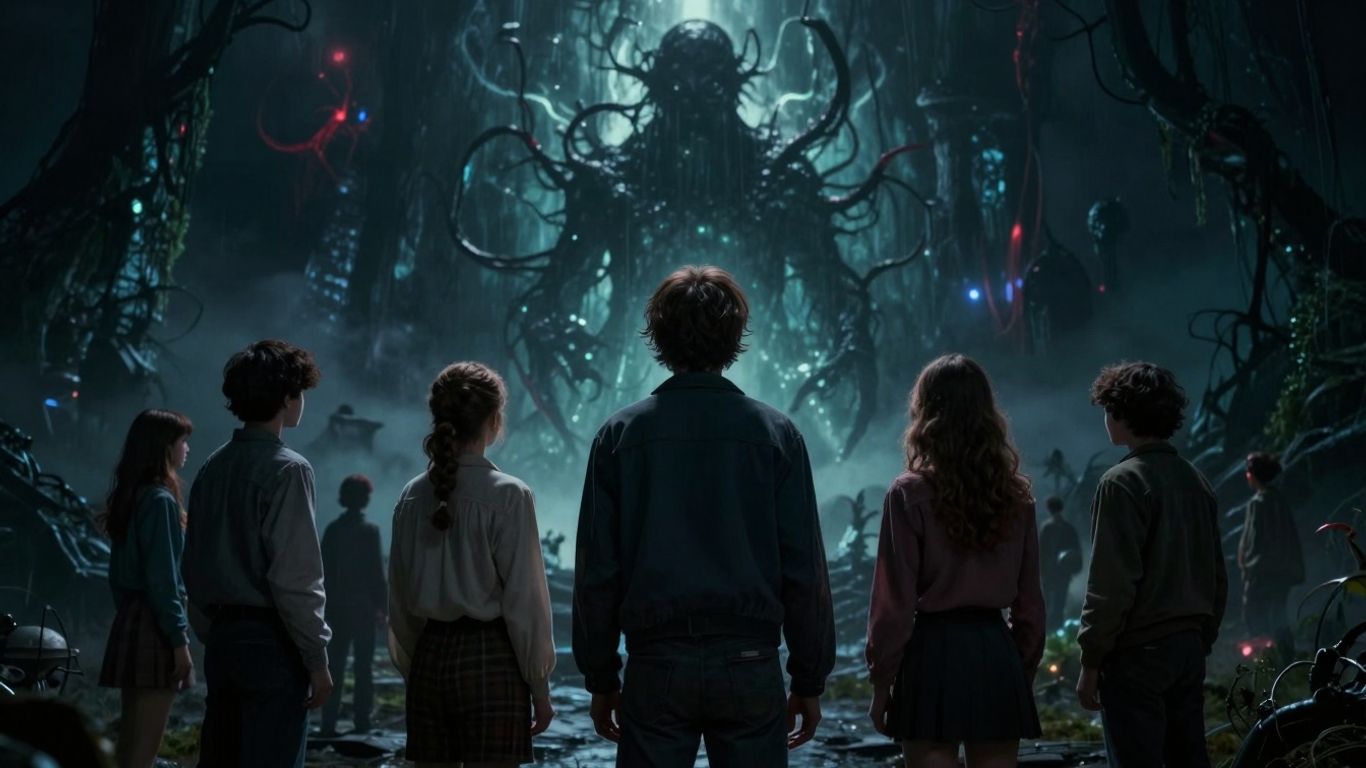
So, the monsters are gone, the Upside Down is (mostly) sealed off, and Hawkins is… well, it’s still Hawkins, just a bit more broken. But what does it all really mean? It’s not just about who won or lost. The finale really digs into what happens after the big fight, after the dust settles, and you’re left with all the mess and the memories.
Beyond Victory: Trauma, Choice, and Survival
This ending isn’t about a clean win. It’s about the scars left behind. Everyone went through some seriously heavy stuff, and that doesn’t just disappear because Vecna is no more. The show makes it clear that surviving isn’t the same as being okay. It’s about the choices people make when they’re faced with the aftermath, how they decide to move forward when the world they knew is gone.
- Lingering Effects: The Upside Down might be contained, but the psychological impact on the characters is immense. Think about Will and his connection to Vecna, or Max’s near-death experience. These aren’t things you just shake off.
- Reclaiming Agency: For characters like Joyce, who spent years fighting a battle no one else believed in, the final victory is a reclaiming of her own power and sanity.
- The Cost of Power: Eleven’s journey highlights the burden of extraordinary abilities and the constant threat of exploitation.
The real battle isn’t just against monsters; it’s the internal struggle to heal and find peace after experiencing profound loss and terror. It’s about learning to live with the ghosts of the past.
The Enduring Power of Belief
Remember how Mike’s D&D story about Eleven surviving felt a bit too convenient? That’s the point. The show suggests that sometimes, belief itself is the strongest weapon. When faced with uncertainty, especially about the fate of someone you love, choosing to believe in a hopeful outcome can be its own form of victory.
- Hope as a Strategy: The group chooses to believe Mike’s version of Eleven’s escape, not because it’s proven, but because it’s what they need to hear.
- Shared Reality: Their collective belief helps to solidify a new, albeit uncertain, reality for them.
- The Strength in Unity: This shared belief system binds them together, offering comfort in the face of the unknown.
Stories Continue, Generations Pass
The final scene, returning to the D&D table, is a powerful symbol. It shows that while this chapter is closed, the stories don’t end. They evolve, they get passed down. The younger kids, like Holly and her friends, are ready to start their own adventures, their own campaigns. It’s a reminder that life goes on, and new generations will face their own challenges, their own monsters, and their own versions of the Upside Down.
- The Cycle of Storytelling: The show emphasizes that narratives are continuous, passed from one generation to the next.
- Passing the Torch: The younger kids stepping up signifies the continuation of bravery and the fight against darkness.
- A New Beginning: The ending isn’t just an end; it’s a launchpad for future stories, whether we see them or not.
So, What’s Next?
And that’s a wrap on Hawkins, folks. The Upside Down might be sealed, but the scars remain, and honestly, that feels about right. The show never really promised a perfectly happy ending, did it? It gave us a messy, imperfect, but ultimately hopeful look at growing up, dealing with trauma, and finding your way after the monsters are gone. Whether it’s Hopper and Joyce finally getting their quiet life, the kids heading off to college, or Steve finding his calling as a protector, everyone gets their moment. And that final scene, back at the D&D table? It’s a perfect reminder that stories don’t really end; they just get passed on. It leaves you thinking, doesn’t it? About what comes next, both for these characters and for us.
Frequently Asked Questions
How did the final battle against Vecna end?
The final fight was a huge team effort! Eleven went head-to-head with Vecna in the mind world, while Hopper and Murray worked to destroy the connection to the Upside Down. Back in Hawkins, the rest of the gang fought to save the captured kids. In the end, Joyce delivered the final blow, ending Vecna’s reign of terror.
What is the Upside Down, really?
The Upside Down is a dark, creepy mirror world that’s connected to ours. It’s not just a place; it’s like a giant, thinking thing. Vecna was influenced by this massive entity, the Mind Flayer, which is like an ancient, evil force that wants to take over.
Did Eleven survive the end of the Upside Down?
That’s the big mystery! Eleven chose to stay behind to make sure the Upside Down collapsed properly. The show doesn’t say for sure if she made it out. Mike tells a story that she survived, but we don’t see it happen. It’s left up to us to decide if she’s okay.
What happened to the characters after the Upside Down was destroyed?
Eighteen months later, things in Hawkins are getting back to normal, but it’s not perfect. Hopper and Joyce are starting a new life together. The older teens are moving on to college and careers, with Steve staying to help the younger kids. It shows that even after fighting monsters, life goes on and people grow up.
What’s the main message of the Stranger Things ending?
The ending isn’t just about winning. It’s about how people deal with tough times, make hard choices, and survive even when things are scary. It shows that even though the monsters are gone, the memories and the lessons learned stay with them. It also reminds us that stories and adventures continue with new people.
Why did Vecna become so powerful?
Vecna, whose real name is Henry Creel, was manipulated by the Mind Flayer. This giant, evil entity offered him power and a twisted sense of purpose. Henry chose to listen to it, which led him down a dark path and gave him the strength to become the villain we see.